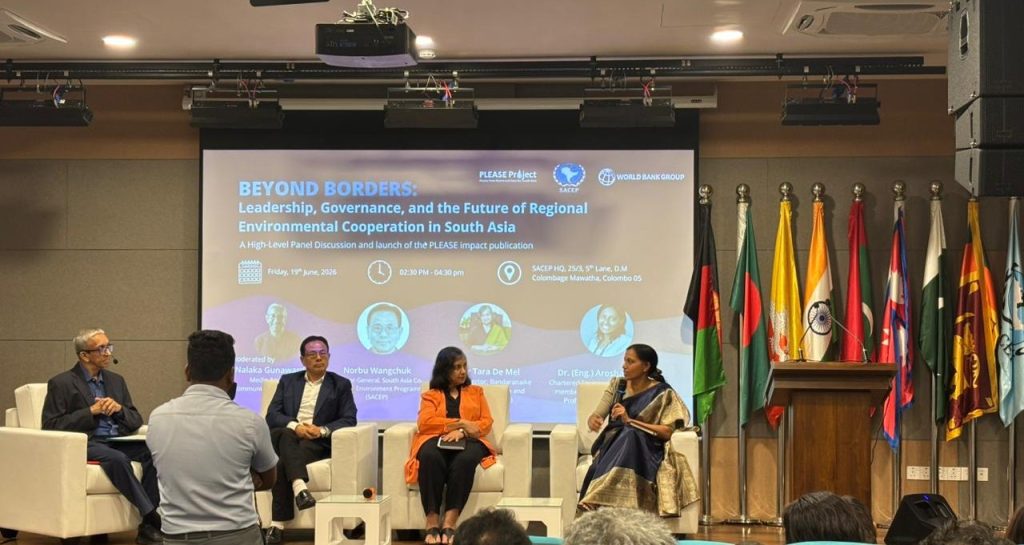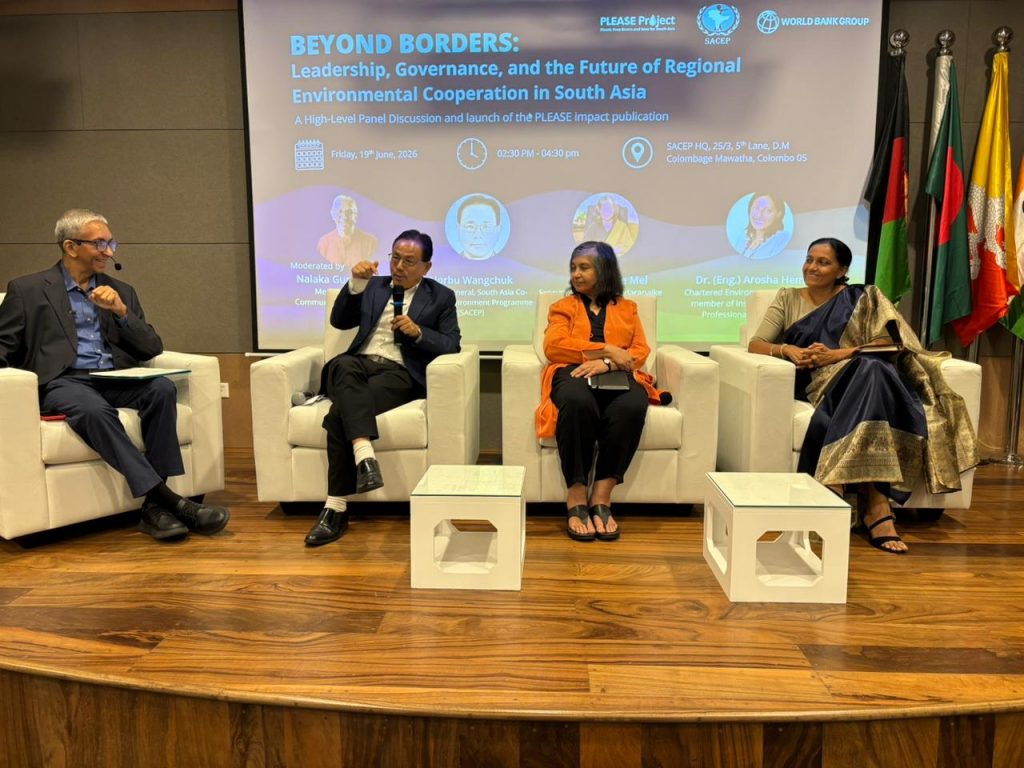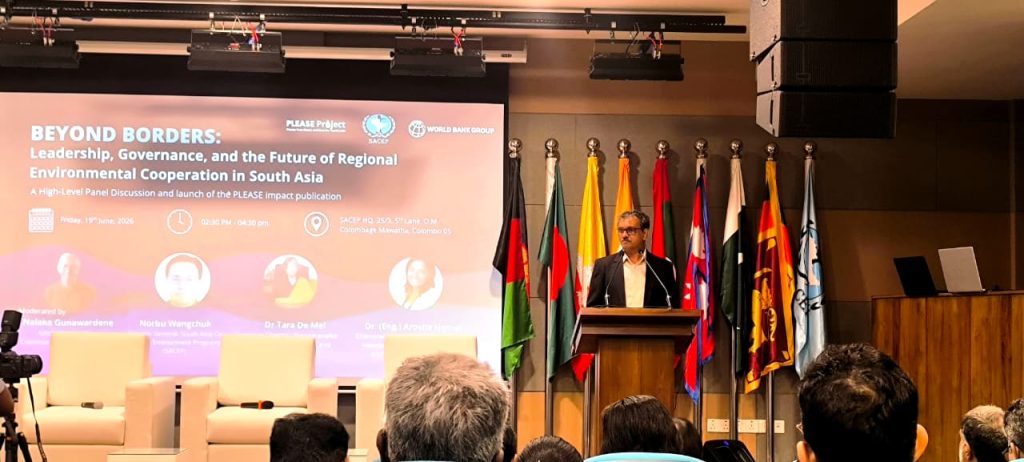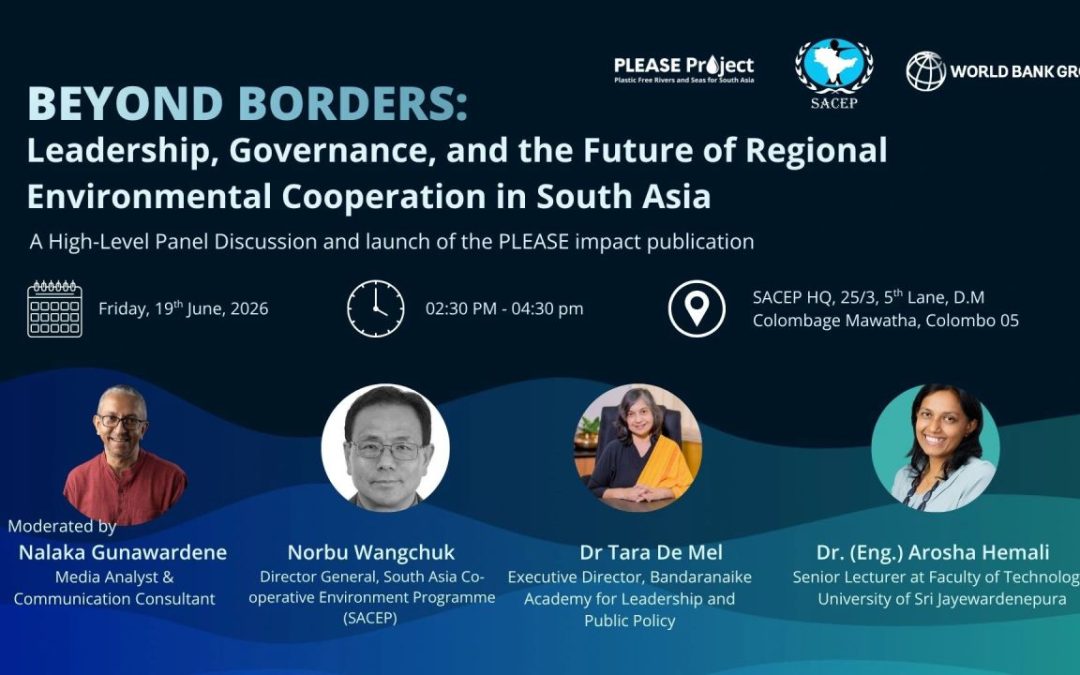
A high-level panel discussion titled “Beyond Borders: Leadership, Governance, and the Future of Regional Environmental Cooperation in South Asia” was successfully held at the South Asia Co-operative Environment Programme (SACEP) Headquarters in Colombo on 19th June 2026. Organised to explore the future of environmental collaboration in the region, the event brought together experts and stakeholders to discuss the growing need for collective action in addressing environmental challenges that transcend national boundaries. Issues such as transboundary air pollution, shared river systems, plastic pollution, climate impacts and natural disasters require coordinated regional responses rather than isolated national efforts.
The distinguished panel featured Mr. Norbu Wanchuk, Director General of SACEP; Dr. Tara de Mel, Executive Director of the Bandaranaike Academy for Leadership and Public Policy; and Dr. (Eng.) Arosha Hemali, Senior Lecturer at the Faculty of Technology, University of Sri Jayewardenepura, representing the Institute of Environmental Professionals Sri Lanka. The session was moderated by science writer and communication consultant Mr. Nalaka Gunawardene, who guided the conversation on regional cooperation, environmental governance and the role of different sectors in achieving sustainable development.
The discussion focused on the role of leadership, governance and institutional frameworks in strengthening environmental cooperation across South Asia. While countries in the region face similar environmental pressures, progress towards regional solutions remains challenging due to political complexities and differences in national priorities. The panel highlighted the need for stronger commitments, better coordination and collaboration among governments, scientific institutions, academia, civil society and the private sector to strengthen regional environmental cooperation.
The session highlighted how scientific partnerships and knowledge-sharing initiatives across South Asia can provide valuable lessons for policymakers, particularly in areas such as the circular economy, sustainable production and consumption. Participants also reflected on the importance of involving diverse stakeholders as active partners in environmental decision-making processes.
The event served as a timely platform to recognise that environmental challenges in South Asia are interconnected and require shared solutions. By encouraging dialogue among regional experts and institutions, the panel discussion contributed to a deeper understanding of the opportunities and challenges in advancing regional environmental cooperation. It reaffirmed the importance of visionary leadership and collaborative approaches in building a resilient, sustainable and environmentally secure future for South Asia.