
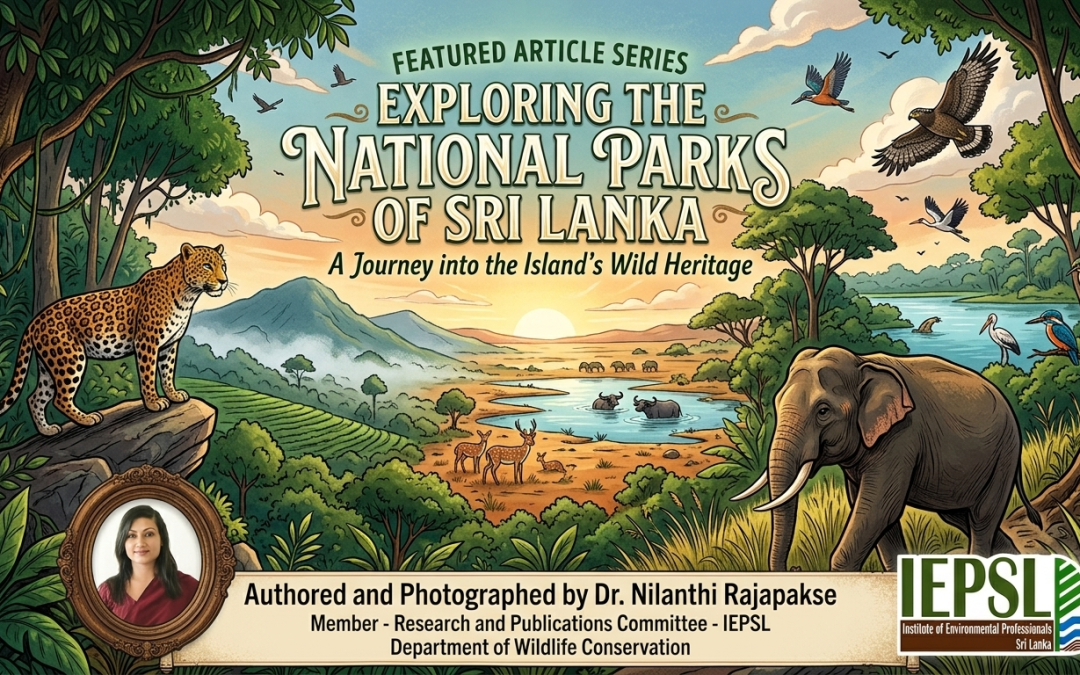
“From mist-covered montane grasslands to arid scrub forests, from coastal lagoons to tropical rainforests, Sri Lanka’s National Parks protect some of the world’s most extraordinary natural treasures.”
Visit the article series here.
Sri Lanka may be a small island, but it is recognized globally as one of the world’s biodiversity hotspots. Its remarkable variety of ecosystems supports an extraordinary diversity of plants, animals, and habitats found nowhere else on Earth. At the heart of this natural heritage lies a network of 26 National Parks, established to conserve the country’s rich wildlife and unique ecosystems for future generations.
Managed by the Department of Wildlife Conservation, these National Parks collectively safeguard thousands of square kilometres of forests, grasslands, wetlands, rivers, coastal ecosystems, and marine environments. They provide essential habitats for iconic wildlife such as the Sri Lankan Elephant, Sri Lankan Leopard, Sloth Bear, Blue Whale, Dugong, Saltwater Crocodile, numerous endemic birds, reptiles, amphibians, butterflies, and thousands of plant species.
Each National Park tells its own unique story. Yala National Park is renowned for its exceptional leopard population, while Wilpattu National Park is famous for its natural “villus” (rain-fed lakes). Horton Plains National Park protects cool montane grasslands and cloud forests, whereas Bundala National Park is internationally recognised as a wetland of global importance for migratory birds. Marine National Parks and coastal protected areas conserve coral reefs, seagrass beds, and other vital marine ecosystems.
Beyond wildlife conservation, these protected areas provide invaluable ecosystem services. They protect watersheds, regulate climate, store carbon, conserve soil, reduce the impacts of natural disasters, and support scientific research, environmental education, and sustainable nature-based tourism. They also contribute significantly to local livelihoods and the national economy through ecotourism.
However, Sri Lanka’s National Parks face increasing challenges, including habitat fragmentation, human–wildlife conflict, invasive alien species, forest fires, illegal activities, pollution, climate change, and growing pressures from development. Addressing these challenges requires sound scientific research, effective management, strong law enforcement, and the active participation of local communities.
This blog series, “Exploring the National Parks of Sri Lanka – A Journey into the Island’s Wild Heritage,” will take readers on a journey through all 26 National Parks. Each article will explore a park’s history, geographical setting, climate, ecosystems, flora, fauna, flagship species, conservation significance, visitor attractions, and current management challenges. The series will also feature original photographs captured during field visits, offering readers an authentic glimpse into Sri Lanka’s remarkable natural landscapes.
Whether you are a nature enthusiast, wildlife photographer, researcher, student, or traveler, this series aims to deepen your understanding and appreciation of Sri Lanka’s protected areas. Every National Park has a unique story, and together they form the backbone of the nation’s biodiversity conservation efforts.
Protecting these landscapes is not only the responsibility of conservation authorities; it is a shared responsibility. By learning about our National Parks, we become better equipped to value, protect, and celebrate Sri Lanka’s irreplaceable natural heritage.
Author and Photograph Credentials:

Dr. Nilanthi Rajapakse (Member: Research and Publications Committee)
Department of Wildlife Conservation