
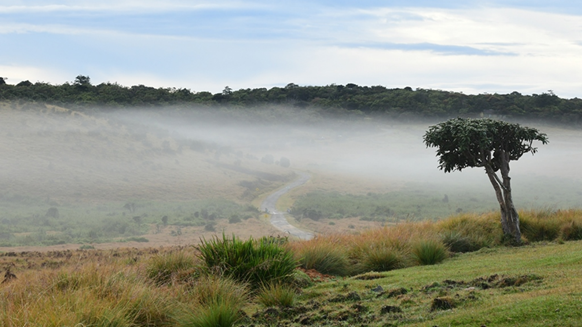
Horton Plains National Park is one of the most important ecological treasures in the Central Highlands of Sri Lanka. It is recognized globally not only as a national park but also as a UNESCO World Heritage Site, reflecting its outstanding universal value as a center of biodiversity. The park’s significance arises from its remarkable concentration of endemic and threatened species of both flora and fauna, as well as its vital role as a major watershed. Ecologically, Horton Plains serves as a lifeline for Sri Lanka’s hydrology, forming the headwaters of three of the nation’s most significant rivers: the Mahaweli, Kelani, and Walawe. This crucial hydrological function highlights its importance for irrigation, hydroelectric power generation, and freshwater supply across extensive regions of the country.
Horton Plains National Park was first declared as aNature Reserve in 1969 and later elevated toNational Park status on March 16, 1988, under theFauna and Flora Protection Ordinance (FFPO). The park is managed by the Department of Wildlife Conservation (DWC) and covers an area of approximately 31 km². It lies at an elevation ranging from 2,100 to 2,389 meters above sea level.
In Sinhala, the plains are known as Maha Eliya Thenna (මහ එළිය තැන්න), a name that reflects their wide, open, and luminous landscape. The park is bordered by Kirigalpota (2,389 m) and Thotupolakanda (2,357 m), Sri Lanka’s second and third highest peaks, respectively. Its scenic beauty is further enhanced by Baker’s Falls and the dramatic cliffs ofSmall World’s End (274 m) andBig World’s End (884 m), often shrouded in mist and cloud.
Beneath the beautiful landscape of Horton Plains lies a fascinating geological foundation. The area is made up of ancient Precambrian metamorphic rocks belonging to the Highland Series. Above this bedrock lies a thick layer of black organic soil, rich in decomposed material, which helps support the unique montane vegetation and retain moisture in this sensitive high-altitude environment.
Climate
The park experiences a subtropical monsoon climate characteristic of the Wet Zone’s eastern extremity. Mean annual temperatures hover around 15°C, with an average annual rainfall of 2150 mm. Persistent cloud cover and strong, often gale-force, south-west monsoon winds dominate the weather patterns from April to September. January and February are typically the driest months, though daytime temperatures can reach up to 27°C.
Biodiversity: A Haven of Endemism
Horton Plains harbors a remarkable array of plant and animal species, characterized by high levels of endemism. While the overall species richness might be lower than some other Wet Zone areas due to the cold montane conditions, the proportion of endemic species is exceptionally high. Recent surveys confirm that approximately 57% of plants, 93% of amphibians, 83% of reptiles, 20% of birds, and five mammal species recorded are endemic to Sri Lanka.
Flora:
The vegetation is a patchwork of Upper Montane Rain Forest (Cloud Forest) and Wet Patana Grasslands. A narrow ecotone of shrubs and herbs forms the transition zone between these two dominant habitats. Cloud forests generally occupy hilltops and upper slopes, while grasslands, including areas of dwarf bamboo, prevail on lower slopes and in valleys.
The Wet Patana Grasslands are recognized as a sub-climax community, maintained historically by natural fires and grazing. They comprise native tussock grasses (Chrysopogon nodulibarbis, Andropogon polyptychos, Garnotia exaristata), and an introduced carpet grass (Axonopus fissifolius) found in areas of historical potato cultivation. Notably, the red-flowering Rhododendron arboreum subsp. Zeylanicum (Maha Ratmal), an endemic sub species, is scattered throughout the grasslands. The native dwarf bamboo (Kuruna densifolia) thrives in valley bottoms, having expanded its range significantly beyond its historical confinement to stream margins. Many herbs can be seen in grasslands such as Exacum macranthum (Nil Binara), Exacum walkeri (Sudu Binara) both are listed as Endangered (EN) with a national conservation status in Sri Lanka and endemic.
With increase in elevation, relatively low temperature and high windy conditions the canopy species become quite stunted giving way to pygmy forests. The Canopy layer which grows up to 15-20 m and dominant canopy species include Calophyllum walkeri (Keena), Michelia nilagirica (Wanasapu), Syzygium rotundifolium, S. revolutum (Damba), Elaeocarpus montanus (Galweralu), E. glandulifer, E. coriaceous, Ilex walkeri, Cinnamomum ovalifolium, Litsea ovalifolia and Photinia integrifolia. Understory grows up to 4 m high and often leading to a dense undergrowth of pioneer species such as Strobilanthes spp. (Nelu), Hedyotis spp. (Weraniya), Osbeckia spp (Bowitiya), Sarcococca brevifolia, Euphorbia rothiana, and thorny Thodalia (Kudumiris) and Rubus species.
Rhododendron arboreum subsp. zeylanicum (Maha Ratmal)
According to recent study done by the DWC, about 430 vascular plant species (flowering plants) have been recorded from the Horton Plains of which, 126 species are endemic to Sri Lanka.
Exacum macranthum (Nil Binara)
- Exacum walkeri (Sudu Binara)
Fauna:
The Horton Plains supports a rich diversity of fauna. Among vertebrates, it is home to 33 species of mammals, 14 species of amphibians, 10 endemic reptiles (including lizards, geckos, and snakes), 1 fish species, and 103 species of birds. The invertebrate fauna is equally diverse, comprising 48 species of butterflies, 1 endemic shrimp species, several species of gastropods and freshwater crabs, and 17 species of dragonflies.
- Fish: The introduced rainbow trout, a carnivorous species, is the only fish found in Horton Plains. However, its presence poses a serious threat to the endemic shrimp (Lancaris singhalensis), which occurs only here, as well as to several restricted-range crab species that are also endemic to Sri Lanka.
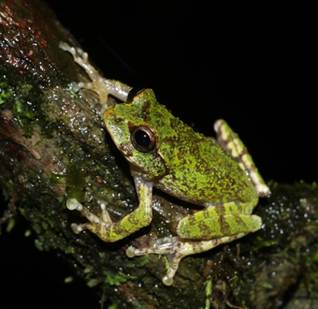
- Amphibians: The wet climate and diverse wetlands provide ideal amphibian habitat. Nearly all species are endemic to Sri Lanka, with a few, like Pseudophilautus alto and P. francenbergi, exclusive to this locality.
The smoky-winged threadtail (Elattoneura leucostigma), a damselfly endemic to Sri Lanka’s montane zone, is listed as Critically Endangered (CR) has been sighted in Horton Plains National Park.
Elattoneura leucostigma (smoky–winged threadtail)
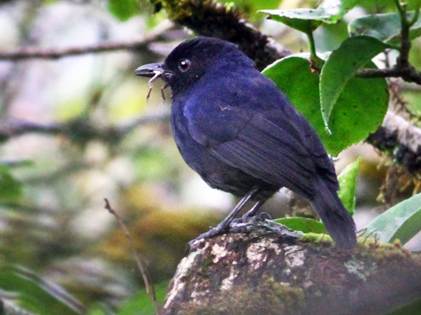
Birds: Horton Plains is home to many of Sri Lanka’s breeding resident and endemic bird species. Among them are three globally threatened endemics: the Sri Lanka Whistling Thrush (Myophonus blighi), Sri Lanka Wood Pigeon (Columba torringtoni), and Sri Lanka Blue Magpie (Urocissa ornata). The cloud forests and tussock grasslands of the park support the highest bird diversity.
- Mammals: The park is globally significant for the endemic red slender loris (Loris tardigradus nycticeboides), one of the world’s most endangered primates. Other notable mammals include the loud-hooting Purple-faced Leaf Monkey (Trachypithecus vetulus), a substantial Sambar (Cervus unicolor) population (estimated at 2,000 individuals), Black-naped Hare (Lepus nigricollis), and a thriving leopard (Panthera pardus) population. Small carnivores such as the Fishing Cat (Prionailurus viverrinus), Ring-tailed Civet (Viverricula indica), Golden Palm Civet (Paradoxurus zeylonensis), and several mongoose species (Herpestes spp.) are also present, alongside endemic rodents like Srilankamys ohiensi and Mus mayori.
Management and Contemporary Challenges
The conservation of Horton Plains’ unique biodiversity and cloud forest as an environmentally sustainable National Park remains a key priority. This responsibility has become even more significant following its designation as a World Heritage Site and the growing environmental pressures it faces.
The main management objectives include:
- Conserving the park’s endemic flora and fauna.
- Protecting the headwaters of the three major rivers that originate within the park.
- Enhancing and sustainably managing visitor facilities and services.
- Establishing a Montane Conservation Education Centre to promote awareness and research.
Current Threats and Issues:
- Cloud Forest Die-back: Ongoing research is critical to fully understand and mitigate the causes of cloud forest die-back and its implications for ecosystem resilience and regeneration.
- Invasive Alien Species: Invasive plants such as gorse (Ulex europaeus), mist flower (Ageratina riparia), Pathan Palu (Austroeupatorium inulifolium) and Bracken fern (Pteridium aquilinum) continue to pose serious threats to native species and the overall integrity of the ecosystem. Active management and eradication programs are essential to control their spread and protect the park’s biodiversity
- Visitor Pressure: With visitor numbers remaining consistently high, managing the impacts of tourism such as waste generation and promoting visitor education for responsible behavior are essential for ensuring the park’s long-term sustainability.
- Climate Change: As a high-altitude montane ecosystem, Horton Plains is particularly vulnerable to the impacts of climate change, including altered rainfall patterns, increased frost events, and potential shifts in species distribution.
Recent Achievements:
- Significant efforts in litter removal and raising visitor awareness regarding responsible waste disposal.
- Establishment of a new visitor and interpretation center, enhancing educational outreach.
- Successful management and control of gorse spread in grassland areas.
In essence, Horton Plains stands as a living testament to Sri Lanka’s natural grandeur and ecological wealth. Its distinctive landscape, climate, and biodiversity, together with its vital hydrological and geological significance, make it an irreplaceable natural treasure that demands unwavering commitment to conservation and sustainable management.
Author and Photograph Credentials:

Dr. Nilanthi Rajapakse (Member: Research and Publications Committee)
Department of Wildlife Conservation