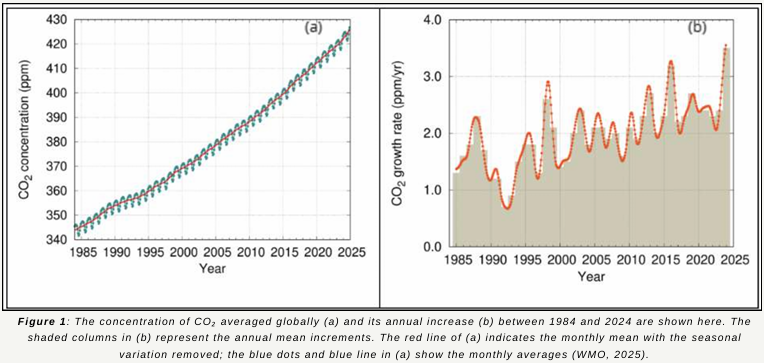
The World Meteorological Organization highlights that atmospheric carbon dioxide (CO₂) is now increasing at nearly three times the rate observed in the 1960s, underscoring the accelerating pace of climate change. A decade-long period from 2011 to 2020 saw an increase of 2.4 ppm per year, as the annual average increase of 0.8 ppm turned into the phenomenon of global warming. The year 2023-2024 saw an unprecedented rise in global average CO₂ concentration of 3.5 ppm, the largest increase since modern measurements began in 1957. (WMO, 2025).
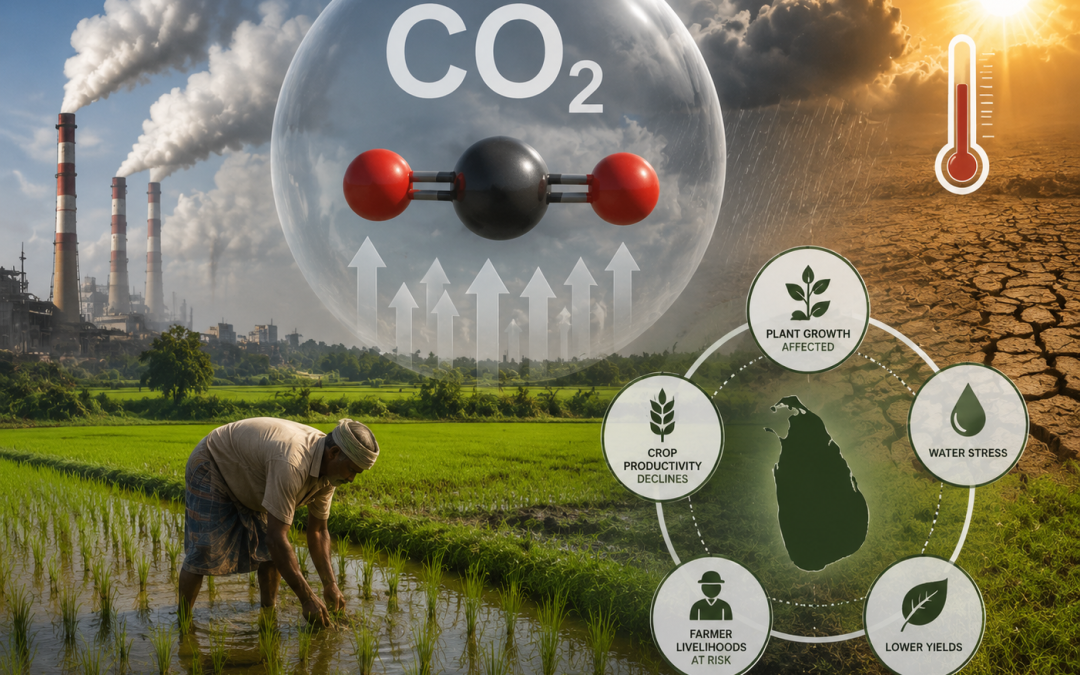
Elevated CO₂ concentration can create a huge impact to critical agriculture sector of Sri Lanka. Although elevated CO₂ enhances plant growth, the other climate effects and the ground agronomic challenges that are created by CO₂ are higher than its positive effects (Wijeratne et al., 2026).
A major concern is the “nutrient dilution,” in which plants grow faster but contain lower concentrations of essential nutrients such as proteins, zinc and iron. This could deteriorate the highly valued quality and flavor profiles of important export commodities like Ceylon Tea and risk the nutritional security of staple crops. The increase in CO₂ levels is a major driver of global warming, which leads to more frequent and severe extreme weather events. Changing weather patterns, including more frequent droughts, floods, and unpredictable rainfall, are already resulting in crop losses. Consequently, increased CO₂ supports the growth of invasive plants and may change pest and disease relationships, thus raising the need for chemicals in agriculture. The report emphasizes that Coconut, a major economic crop, may be less responsive to elevated CO₂ levels, which would then make the plant more susceptible to heat and water stress. The industry’s overall strength is now being challenged.
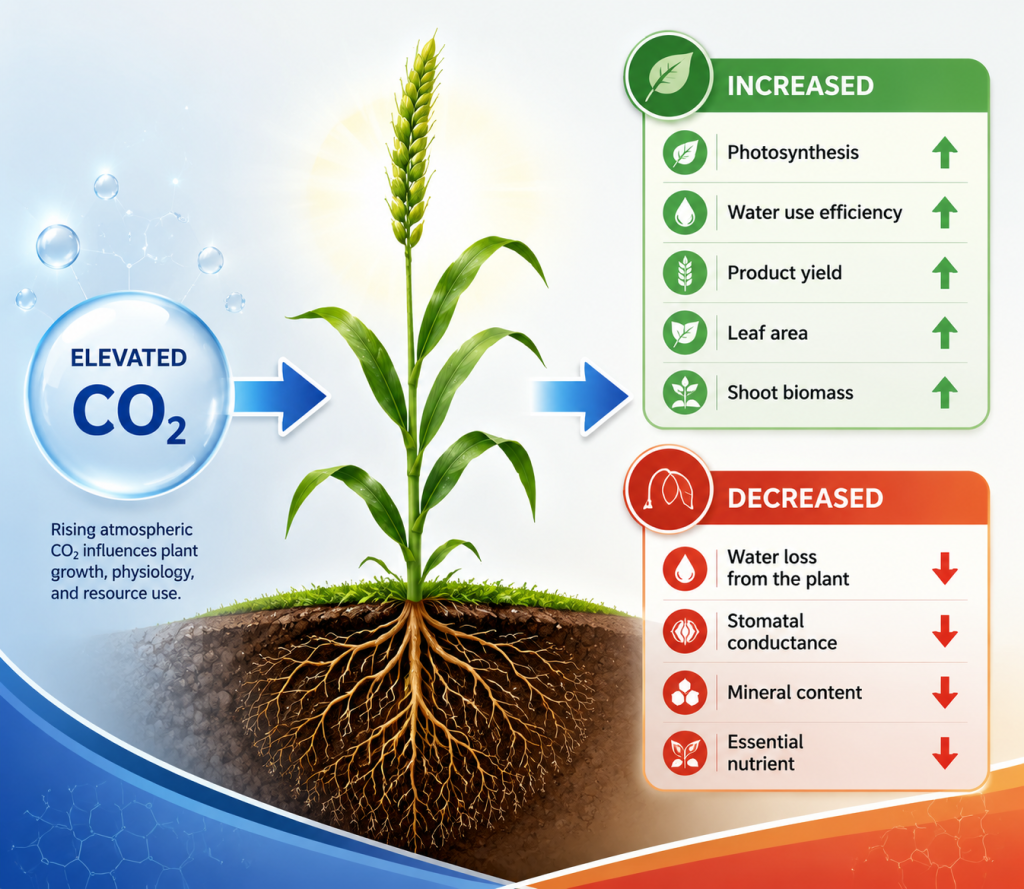
Theoretically, elevated CO₂ can improve photosynthesis as well as water-use efficiency in certain crops like rice, tea, and some vegetables. However, research shows that these advantages are strongly dependent on optimal nutrient levels, especially nitrogen.
Yet, Sri Lanka is facing nutrient deficiencies in soil. It can affect the yield of any kind of food. The Ministry of Agriculture, along with the Department of Agriculture, is advised to give importance to the breeding of climate-resistant plant varieties and the development of eco friendly farming methods.
Authorities emphasize the need to revise fertilizer recommendations and strengthen soil health management to mitigate nutrient leaching. In Sri Lanka, it is a dangerous oversimplification to assume that elevated CO₂ concentrations will benefit agriculture uniformly. Evidence suggests that the overall impact is likely to be adverse, with significant implications for food security, farmers’ livelihoods, and export revenues unless science-based adaptation strategies are implemented promptly.
As a country, what can we do to face these challenges?
- We can directly integrate climate adaptation and CO₂ into national agricultural policy. This must be a collective effort by the ministries of Agriculture, Environment, Irrigation, and Science.
- Emphasize the “CO₂ Fertilization Effect” Realities: Study the compromise between the possible rise in yield and the decline in essential minerals (such as zinc and iron) in rice and other major grains.
- The development of varieties with improved nutrition is necessary.
- The land should be cultivated to produce traditional millets (kurakkan), pulses, roots, and other crops that are tolerant of climate change and thereby increase diversity in food.
- Increased levels of carbon dioxide might alter the chemical composition of plants and turn some of the crops more vulnerable to pests.
- Therefore, it is advisable to fortify national monitoring and early warning systems, and also, to conduct training programs for farmers on Integrated Pest Management (IPM).
Following the above-mentioned steps, we will be able to successfully face this effect of elevated CO₂ in the agriculture sector.
References:
Wijeratne, V. P. I. S., Mehmood, M. S., Jayatunga, J. N. D., & Manawadu, L. (2026). An Integrated Participatory Framework for Climate-Smart Agricultural Practices from the Lens of Climate Change, Farmers’ Perceptions and Adaptations. Sustainability, https://www.mdpi.com/2071-1050/18/7/3401.
WMO (2025) Carbon dioxide levels increase by record amount to new highs in 2024, https://wmo.int/news/media-centre/carbon-dioxide-levels-increase-record-amount-new-highs-2024
The article was originally published in the IEPSL Newsletter, Vol 3, Issue 2 (ISSN: 3021-6133) in June 2026.
Author: