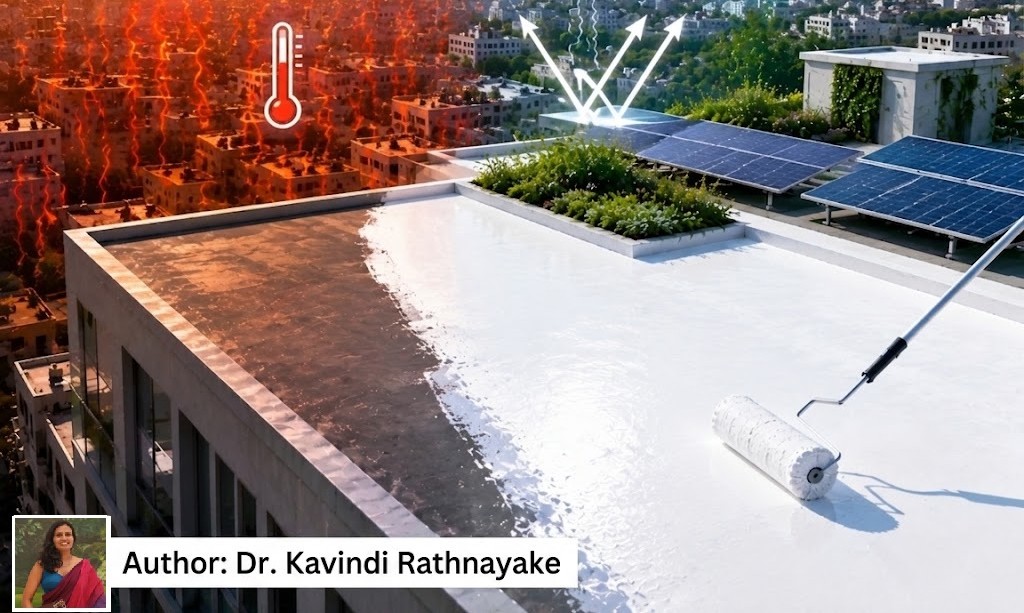
Across the world, cities are learning that their best defence against the brutal heat waves isn’t always a new park or a massive cooling project: it’s the roofs above our heads. Green roofs and solar panels have long been a part of this conversation. Now, cool roof paints are emerging as a crucial new layer in the integrated rooftop toolkit, turning the same patch of urban surface into a multi-purpose shield against extreme heat.
Why Heat Waves Demand “Layered” Roofs:
Heat waves strike cities the hardest because concrete, asphalt, and dark roofs soak up sunlight, store it, and release it slowly throughout the night. Top-floor residents, those without air-conditioning, and people in densely built neighbourhoods feel the worst of it. A single solution, for example, just planting more trees or adding solar panels, can help but rarely addresses all the ways heat affects buildings and people.
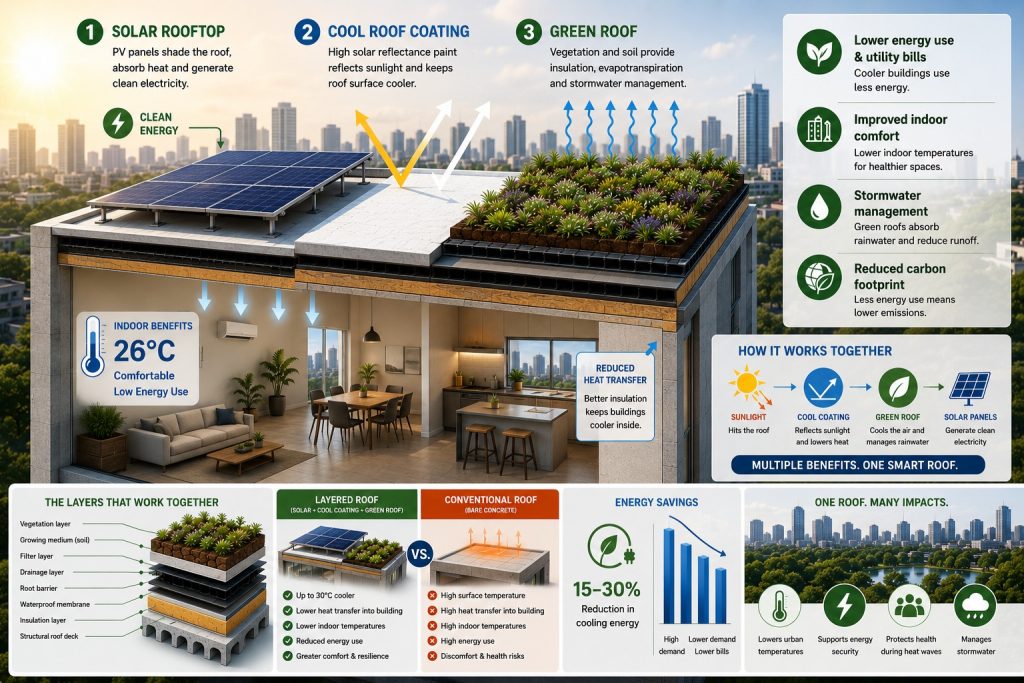
Recognising this need, integrated rooftops tackle the problem from multiple angles at once. Green roofs cool and manage stormwater, solar panels cut emissions and power cooling, and now cool roof paints directly attack the physics of overheating by reflecting sunlight away. Together, these measures allow each square metre of the roof to perform far more climate work than any one solution could ever achieve alone.
Cool Roof Paints: The New Frontline Against Heat
Cool roof paints are specially designed coatings that bounce a large fraction of incoming sunlight back into the sky and radiate heat away efficiently. Where a traditional dark roof might become scorching hot under the midday sun, a coated roof stays noticeably cooler, sometimes dozens of degrees lower. This temperature difference matters not only for building comfort but also for human health during extreme heat events.
Cool Roof Paints are added as a New Integration to Rooftop Systems, they:
- Lower indoor temperatures, reduce the need for air conditioning and make the top floors more livable.
- Cut peak energy demand during heat waves, easing the pressure on overstressed power grids.
- Reduce the background “heat reservoir” that keeps cities hot late into the night, when bodies most need to recover.
In other words, cool roof paints turn the roof into a passive heat-wave defence system that operates continuously, requiring no behaviour change from the residents.
How Cool Paints Strengthen Green Roofs and Solar Panels?
The power of cool roof paints becomes clearer when you see how they interact with existing rooftop technologies.
- Under solar panels: A reflective coating beneath and around solar arrays can keep the roof surface cooler, which helps the building and can improve panel efficiency because most solar technologies perform better at lower temperatures. The combination means more electricity is produced with less heat trapped.
- Next to green roofs: Cool-coated zones around planted areas reduce the overall thermal load on the building. Green roofs then focus on evapotranspiration, habitat, and stormwater management. The paints and plants work in tandem: one reflects heat away, the other cools and absorbs water.
- On roofs that cannot support heavy loads: Many older buildings cannot safely hold deep soil or heavy installations. Cool roof paints offer a lightweight option to still join the integrated rooftop network, delivering serious heat protection without structural upgrades.
By weaving cool roof paints into the design, integrated rooftops become more flexible. Even buildings that can’t host lush gardens or large solar arrays can still contribute to citywide cooling.
Integrated Rooftops Designed for Heat-wave Resilience
Picture a heat-wave-ready roof in a dense neighbourhood. The central area holds the solar panels angled toward the sun. Beneath and around them, the roof is coated with high-reflectance, high-emittance cool paint, slashing surface temperatures and protecting interiors. At the edges, lightweight green roof modules add plants that cool the air and soak up rainwater.
During a heat wave:
- The cool paint keeps the roof and upper floors significantly cooler than a conventional roof.
- Solar panels provide extra electricity during periods of peak heat, helping power fans, efficient air conditioning systems, and community cooling centres, when demand is at its highest.
- Green roof sections provide micro-habitats for biodiversity and pockets of cooler air, while also holding rain if a storm follows the heat.
All of these happen on the same roof, in the same limited space. The building becomes a miniature climate system, actively helping the city to face extreme temperatures with no extra land taken up on the ground.
From One Roof to a Heat-smart City
When cool roof paints are integrated across many buildings alongside green roofs and solar panels, the effect scales up. Entire districts experience lower peak temperatures. Vulnerable communities benefit from quieter, cheaper, and more reliable cooling. Power grids face less strain when heat waves push demand upward. Meanwhile, the city becomes more climate-resilient without needing to carve out new open spaces in already crowded streets.
Integrating cool roof paints into rooftop design isn’t just a cosmetic upgrade; it’s a strategic move. By adding this reflective layer to the existing mix of vegetation and solar technology, cities can turn every available square metre of roof into an active ally against extreme heat.
The article was originally published in the IEPSL Newsletter, Vol 3, Issue 2 (ISSN: 3021-6133) in June 2026.
Author: