
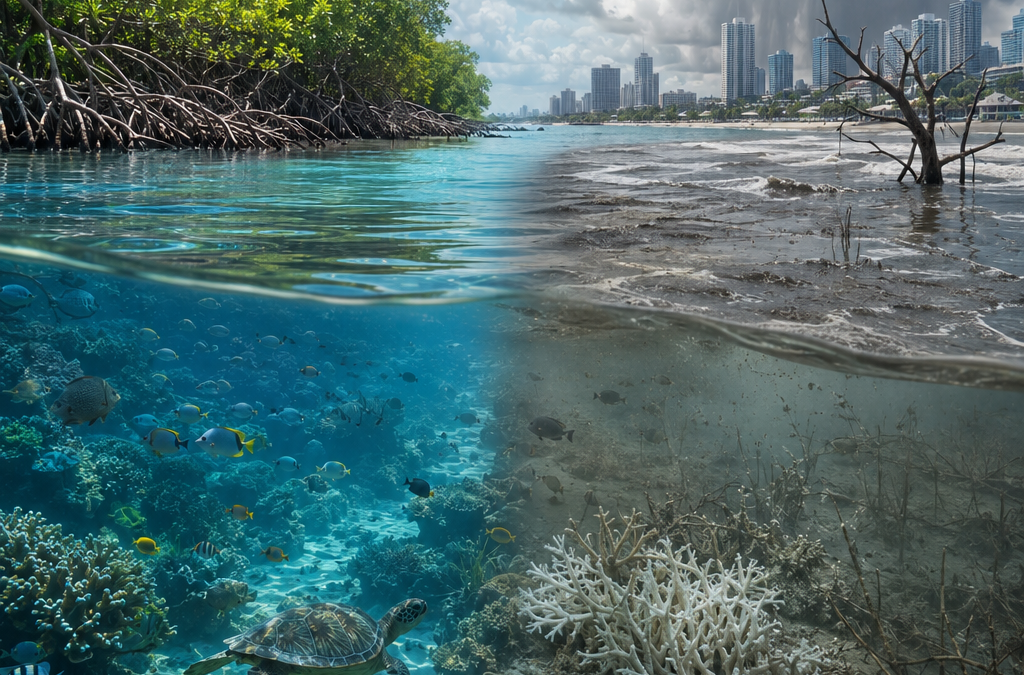
Climate change describes long-term shifts in weather patterns and average temperatures on Earth. It is mainly caused by human activities, predominantly the burning of fossil fuels, deforestation, and industrial processes that release greenhouse gases into the atmosphere. These greenhouse gases, such as carbon dioxide (CO2) and methane (CH4), trap heat from the sun and cause warming of the planet.
Coastal marine systems play a key role in supporting biodiversity, providing ecosystem services, and sustaining human livelihoods. However, these systems are particularly susceptible to the effects of climate change due to human population growth and coastal development. Therefore, climate change can have a significant impact on coastal ecosystems, specifically estuaries and coral reefs.
Coastal marine systems, including coral reefs, mangroves, and seagrass beds, are rich in biodiversity and support a diverse array of marine species, including economically important fish and shellfish. The degradation or loss of these habitats due to climate change can result in a decrease in biodiversity and disrupt the intricate balance of these ecosystems. These systems offer essential ecosystem services that benefit both the environment and human populations. They serve as natural defenses against storms and coastal erosion, safeguard coastlines from flooding, and serve as breeding grounds for numerous commercially valuable fish species. Moreover, the effects of climate change, such as rising sea levels and more intense storms, can compromise these services, endangering coastal communities. Mangroves and seagrass beds, in particular, are effective carbon sinks, absorbing and storing significant amounts of carbon dioxide, which helps mitigate climate change. However, climate change poses a threat to these areas by eroding and submerging coastal ecosystems and eliminating wetlands.
However, rising temperatures and ocean acidification associated with climate change can weaken the ability of these ecosystems to sequester carbon, potentially exacerbating global warming and warmer and more acidic oceans are likely to disrupt coastal and marine ecosystems. Coastal communities heavily rely on marine resources for their livelihoods, including fishing, tourism, and aquaculture. Climate change impacts, such as ocean warming, altered ocean currents, and increased frequency of extreme weather events, can disrupt these activities. This can lead to economic losses, food insecurity, and displacement of coastal communities.
Further, several species exhibit sensitivity to even slight increases in temperatures compared to their natural habitat. A temperature rise as minimal as 1 degree Celsius can swiftly impact the mortality rates of certain organisms and alter their geographical ranges significantly. The impacts of climate change on coastal marine systems can lead to distributional changes among species. While more mobile species can adjust their ranges over time, less mobile species may struggle to adapt. As a result, there may be a mix of varying and new organisms in a region, forcing coastal and marine ecosystems to cope with unfamiliar predators, prey, parasites, diseases, and competitors. The success of different species in this changing environment is uncertain and difficult to predict. Additionally, fisheries would be affected as certain species may disappear from a region while others migrate in. Warmer conditions could benefit the growth and extended growing season of aquaculture species, but it may also become too warm for certain species in specific regions, necessitating a shift in the species being cultivated.
As temperatures rise, water expands and glaciers melt, leading to higher sea levels that threaten coastal areas with flooding and erosion. Habitats like salt marshes and mangroves face submergence, waterlogged soils, and plant death due to salt stress. Human-made structures can disrupt sediment input, causing these habitats to disappear. While undeveloped coasts allow for natural migration of plant systems, human development impedes this movement. Marshes and mangroves are crucial for coastal ecosystems, providing nurseries and habitats for various species. Their loss would impact nutrient flow, energy transfer, habitats, and biodiversity. Some organisms may benefit temporarily from habitat changes, such as shrimp, menhaden, dabbling ducks, and shorebirds.
In affected areas, some organisms may be lost if their habitats disappear due to climate change, potentially impacting species like Black and Clapper Rails and plovers. Climate change could modify coastal and estuarine ecosystems by altering precipitation levels. Decreased precipitation and freshwater input could disrupt estuarine food webs and nutrient flushing processes. While reduced river flow might lower nutrient input in less polluted watersheds, areas with nutrient and contaminant sources could face different consequences. Human development and decreased river flow could degrade water quality, harming fisheries and human health through issues like harmful algal blooms and contaminant accumulation. Conversely, increased rainfall and freshwater runoff into estuaries could lead to water column stratification, reducing oxygen levels in nutrient-rich estuaries.
Changes in wind speed and direction, as well as temperature fluctuations, play a crucial role in influencing the presence and abundance of fish and invertebrate species in coastal marine systems. Variations in these factors can impact the upwelling process, affecting phytoplankton production. Climate-induced alterations in upwelling patterns may either enhance productivity or disrupt the movement of larval fish and invertebrates to vital nurseries like estuaries. Any disturbances to these circulation patterns due to climate change have the potential to alter the species’ composition of coastal ecosystems. Ultimately, shifts in water column mixing and stratification driven by climate-related phenomena can lead to significant reorganization of these marine environments. Increased levels of carbon dioxide (CO2) in the ocean lead to a decrease in its pH, resulting in changes to the chemical composition of ocean carbonate. This can have detrimental impacts on planktonic organisms that depend on calcium carbonate for their skeletal structure. These organisms are thought to have significant roles in the interactions between the ocean and the atmosphere. However, the exact consequences of their decline are not yet fully comprehended.
Coral reefs, already facing threats from abusive fishing practices, pollution, disease outbreaks, and invasive species, are also at danger from changes in seawater chemistry, temperature raise, and rising sea levels. A lower ocean pH and altered carbonate chemistry would delay the calcification process necessary for coral reef formation. Increased warming would lead to coral bleaching, disrupting the symbiotic relationship between coral animals and the unicellular algae (zooxanthellae) that reside within coral tissues, enabling corals to thrive in nutrient-poor waters and secrete calcium carbonate structures. Light conditions would ultimately become too low for zooxanthellae to continue photosynthesis when sea levels rise faster than corals can build their reefs upward. Reefs near low-lying coastal areas would likely experience increased coastal erosion rates due to rising sea levels which result degrading of water quality, reduced light penetration necessary for photosynthesis, and increased sedimentation that smothers and stresses coral. The loss of coral reefs would not only impact the high biodiversity of these systems but also affect fisheries and recreational chances they provide. Currently, marine ecosystems are experiencing significant disruptions which impact the delicate balance of ecosystem and far-reaching consequences for the communities and industries that depend on them. It is crucial to take the immediate action to overcome these challenges includes greenhouse gas emission, implementing sustainable coastal conservation. Collaboration between governments, scientists, communities, and industries is essential to develop and implement effective strategies. These collaborative proactive measures lead to strive towards a more sustainable and resilient future for the vital ecosystems.
Author:

A.L.Y.H. Aruppala (M00947)
This article was originally published in the Daily Mirror” Newspaper on 05th June 2025.
Link to the original article: https://www.dailymirror.lk/special_edition/Shifting-Tides-Navigating-the-Impact-of-Climate-Change-on-Coastal-Marine-Ecosystems/452-310766