
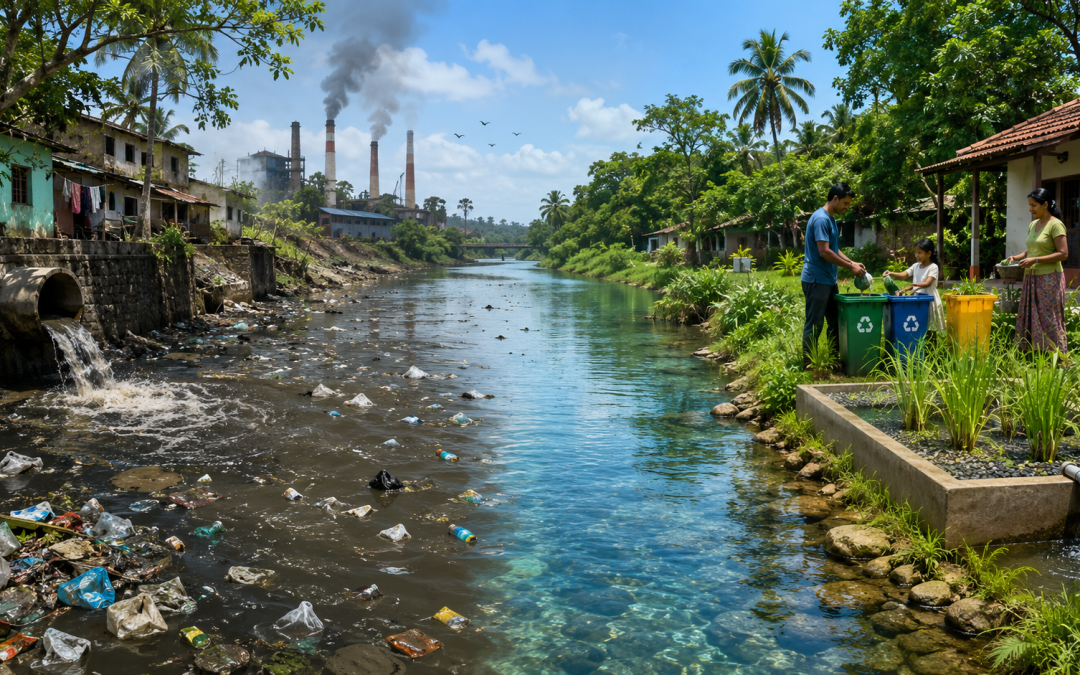
Water pollution is a pressing global issue that threatens ecosystems, human health, and sustainable development. In Sri Lanka, rapid urbanization, industrial expansion, and domestic waste mismanagement have contributed to significant water pollution. While industries are often blamed for contamination, households also play a critical role in both exacerbating and mitigating the issue. Addressing water pollution requires collective responsibility, integrating global best practices with local strategies.
Water pollution is a key environmental challenge worldwide. According to the United Nations, a significant percentage of wastewater generated globally is discharged untreated into the environment, affecting both surface and groundwater quality. Contaminated water sources lead to the spread of diseases such as cholera, dysentery, and typhoid, causing severe health risks. To combat these issues, the UN’s Sustainable Development Goal on Clean Water and Sanitation aims to ensure safe and sustainable water management for all. Sri Lanka, as a signatory to the 2030 Agenda for Sustainable Development, has an obligation to implement policies that promote water conservation and pollution prevention at all levels, including households.
Sri Lanka faces significant water pollution challenges due to both industrial and domestic activities. Industries such as textile manufacturing, food processing, and chemical production release untreated effluents into rivers and lakes, with studies indicating that major drinking water sources, such as the Kelani River, are heavily contaminated due to industrial activities. Agricultural runoff also contributes to water pollution, with excessive use of fertilizers and pesticides leading to nitrate and phosphate contamination, causing eutrophication in various water bodies. Domestic wastewater, including detergents, cooking oil, pharmaceuticals, and plastics, contributes significantly to pollution, particularly in areas where sewage disposal remains unregulated. Improper disposal of solid waste, including plastic and non-biodegradable materials, further exacerbates the problem by clogging drains and affecting marine ecosystems and biodiversity.
At a domestic level in Sri Lanka, wastewater disposal primarily happens through on-site septic tanks and soakage pits, which are the most readily available technology for treating toilet waste. However, this method is not considered environmentally optimal and lacks proper treatment for greywater, which includes water from washing and bathing. The standard practice for most households involves collecting wastewater in a septic tank where solids settle, and the liquid is then discharged into a soakage pit to percolate into the ground. The design and construction of these systems are regulated under Sri Lanka Standard (SLS) 745, which provides guidelines for proper effluent disposal. While blackwater is typically handled in a septic tank, greywater is often disposed of directly into drains without proper treatment, potentially impacting water quality. Due to the lack of comprehensive wastewater treatment systems, untreated or partially treated wastewater can contaminate groundwater and surface water bodies. In densely populated urban areas, managing wastewater from individual septic tanks can be difficult and may require more advanced treatment methods.
Potential improvements for domestic wastewater disposal in Sri Lanka include upgrading septic tank systems to incorporate additional treatment stages to better handle greywater and reduce pollutants. Constructed wetlands, developed by the National Engineering Research and Development Centre (NERDC), offer a sustainable solution for greywater treatment at the domestic scale. These systems utilize natural plant-based filtration to improve wastewater quality before discharge. Establishing small-scale wastewater treatment plants in neighborhoods can also help collect and treat wastewater from multiple households, ensuring better environmental management.
Sri Lanka has several regulations governing wastewater disposal, particularly under the National Environmental Act. Additionally, SLS 745 outlines best practices for septic tank design, ensuring that effluent discharge does not contaminate groundwater. Households are expected to adhere to these guidelines on proper sewage and greywater management, although enforcement at the domestic level remains limited. More robust legal frameworks and infrastructure investments are necessary to ensure better wastewater treatment at the household level.
Households have a direct influence on water quality and can adopt several measures to mitigate pollution. Reducing chemical use by opting for eco-friendly cleaning products, minimizing pesticide application in home gardens, and using biodegradable detergents can significantly reduce chemical discharge into water sources. Proper waste disposal, including segregating waste, composting organic matter, and recycling plastics, can prevent solid waste from entering water bodies. Minimizing water wastage through rainwater harvesting, fixing leaks, and using water-efficient appliances can help reduce wastewater generation. Responsible sewage management is also essential, ensuring that household wastewater is properly treated before disposal to prevent groundwater contamination. Constructing soakage pits or septic tanks in accordance with SLS 745 can contribute to better waste management. Additionally, adopting NERDC-developed constructed wetlands can naturally filter greywater before it reaches water sources. Community engagement and awareness also play a key role, with households encouraged to participate in cleanup activities, advocate for better waste management policies, and educate others on sustainable practices to protect water resources.
Water pollution in Sri Lanka is a growing concern that requires immediate attention at all levels. While industrial regulations and government policies are essential, individual households play an equally important role in preventing contamination. By adopting sustainable practices, reducing chemical discharge, and properly managing waste, Sri Lankan households can contribute to cleaner water sources and a healthier environment. Strengthening domestic wastewater treatment, improving legal frameworks like SLS 745, and promoting awareness are crucial steps toward sustainable water management. Water conservation and pollution prevention are shared responsibilities—ones that must begin at home.
The article was originally published in the “Daily Mirror” on 05th June 2025.
Article Link: https://www.dailymirror.lk/special_edition/The-Role-of-Households-in-Preventing-Water-Pollution-in-Sri-Lanka/452-310758
Author:
Eng. N P T Perera
(M 00786)